Getting your first 100 podcast listeners starts with three things: creating episodes for a specific audience, putting your podcast where those people can find it, and giving them a good reason to listen.
You don’t need expensive advertising, thousands of social media followers, or professional recording equipment to get started.
Instead, focus on reaching people who already care about your topic. Share your episodes in relevant communities, collaborate with other creators, make short promotional clips, and encourage listeners to come back.
The challenging part of starting a podcast isn’t necessarily recording your first episode. It’s getting someone who doesn’t know you to press play.
And if you’ve already published a few episodes but your listener numbers are barely moving, you’re certainly not alone in facing that challenge.
In this guide, I’ll explain 10 practical ways to find your first podcast audience, how to measure your progress, and what to focus on during your first 30 days.
What Does Getting 100 Podcast Listeners Actually Mean?
Before promoting your podcast, it’s important to understand what you’re trying to achieve.
Getting 100 listeners isn’t necessarily the same as getting 100 downloads or 100 plays.
These numbers measure different things.
| Metric | What it tells you |
|---|---|
| Unique listeners | How many distinct people listened during a particular period, as estimated or reported by a platform |
| Downloads | How many qualifying episode downloads were recorded |
| Plays | How many times episodes were played according to a platform’s measurement rules |
| Followers | How many people follow your podcast on a particular platform |
| Returning listeners | How many people came back after listening previously, according to the platform’s definition |
For example, imagine you launch a podcast about personal finance.
Your first episode gets 45 plays, your second gets 35, and your third gets 40.
That’s 120 plays altogether.
But some people may have listened to multiple episodes. So those 120 plays don’t automatically represent 120 different listeners.
Spotify for Creators provides audience metrics that distinguish unique people from plays and downloads. Apple Podcasts Connect also reports listener and engagement metrics, although its definitions differ.
You can explore these definitions in the official
support.spotify.com and
podcasters.apple.com.
For your first milestone, I’d recommend aiming for 100 unique listeners over a clearly defined period, such as 30 days, while also tracking whether people return for another episode.
If you can’t reliably measure unique listeners across every listening app, use the audience metrics available to you and keep your reporting consistent.
That gives you a more useful picture of your progress than chasing a large download number alone.
1. Choose a Specific Audience Before Promoting Your Podcast
One of the biggest mistakes new podcasters make is trying to create a show for everyone.
A podcast that covers too many unrelated topics can be difficult to explain and harder to promote.
Consider these two podcast descriptions:
Broad podcast: “A podcast about business, motivation, and success.”
Focused podcast: “A weekly podcast helping first-time freelancers find clients, price their services, and grow their income.”
The second description immediately tells potential listeners who the podcast is for and what they’ll learn.
That makes it easier to introduce the show in conversations, online communities, and social media posts.
Read More: How to Promote a Podcast on Social Media
How to identify your ideal listener
Think about three questions:
- Who is the podcast for?
- What problem, interest, or goal brings those people together?
- Why would they choose your show over other content?
Imagine you’re starting a fitness podcast.
Instead of targeting everyone interested in fitness, you could focus on busy office workers who want simple 20-minute workouts.
You could then create episodes such as:
- “How to Start Working Out When You Have a 9-to-5 Job”
- “Three Beginner Workout Mistakes to Avoid”
- “How to Build a Simple Weekly Exercise Routine”
These topics match recognizable problems.
My recommendation: Write a one-sentence description of your ideal listener before investing time in promotion.
The clearer your audience, the easier it becomes to find places where those people already spend time.
2. Launch With Three Useful Episodes
When somebody discovers your podcast for the first time, they’ll often want to know whether it’s worth following.
Having several useful episodes available gives them more opportunities to decide.
I generally recommend preparing three strong episodes for your initial podcast launch, provided you can maintain quality.
This isn’t a requirement imposed by podcast platforms. It’s a practical starting strategy.
Here’s how I would organize them.
Episode 1: Introduce the podcast through a useful topic
Your first episode should clearly demonstrate what listeners can expect.
You can briefly introduce yourself, but don’t spend the entire episode talking about your background.
Give people useful information from the beginning.
For example, a podcast about starting a small business might launch with:
“How to Start a Small Business With a Limited Budget.”
That immediately promises something valuable.
Episode 2: Solve a common beginner problem
Choose a question your audience frequently asks.
If your show covers personal finance, you might discuss:
“How to Create Your First Monthly Budget.”
Make the advice specific enough that someone can take action after listening.
Episode 3: Offer a different perspective
Your third episode could feature a guest, a practical case study, or a discussion of common mistakes.
For example:
“Five Budgeting Mistakes Beginners Should Avoid.”
Now someone discovering your show has several opportunities to find something relevant.
You can also create a short podcast trailer explaining who the show is for, what topics you’ll cover, and how often you plan to publish.
Don’t delay your launch for months trying to perfect everything. Three helpful episodes are more valuable than an unfinished library of twenty ideas.
Read More: How to Grow a Podcast on YouTube
3. Make Your Podcast Easy to Find
Even excellent podcast content needs a way to reach listeners.
Start by ensuring your show is available on major platforms used by your target audience.
For a US-focused podcast, consider:
- Apple Podcasts
- Spotify
- YouTube and YouTube Music
Your podcast host may help with distribution, but you’ll need to check which destinations require additional setup or verification.
Optimize your podcast title and description
Your podcast title should be easy to remember and relevant to your subject.
Avoid stuffing the title with keywords.
A good description should answer three questions:
- What is the show about?
- Who should listen?
- What will listeners gain?
For example:
“Freelance First Steps helps new freelancers find clients, set realistic rates, and build sustainable independent careers. Each week, we discuss practical strategies for getting started and growing your freelance business.”
This communicates the value of the show without making exaggerated promises.
Write searchable episode titles
Compare:
“Episode 4: Let’s Talk About Money”
With:
“How to Save Your First $1,000 on a Tight Budget”
The second title tells people what they’ll learn.
It also uses language that someone might naturally search for.
Searchable titles don’t guarantee discovery, but they make your episodes easier to understand.
Don’t ignore YouTube
YouTube can provide another discovery opportunity for new podcasters.
According to
support.google.com, eligible creators can submit a podcast RSS feed. YouTube then creates videos using the podcast’s artwork and audio.
You can also publish video podcast episodes directly.
RSS delivery is available in supported countries, including the United States.
For an audio-first creator, this offers another way to make episodes accessible without filming a traditional video podcast.
However, YouTube has its own audience behavior, analytics, and content rules. Publishing there doesn’t automatically guarantee more listeners.
4. Personally Invite Your First 20–30 Potential Listeners
Your existing network can be a useful starting point for podcast promotion.
Think about friends, coworkers, professional contacts, former classmates, or people you’ve met through communities related to your topic.
But there’s an important distinction.
Don’t ask everyone you know to listen. Ask people who might genuinely find your podcast useful.
If your podcast is about parenting young children, someone without an interest in that subject may not be your best potential listener.
Instead, find people who are likely to care about your episodes.
How to invite someone without sounding pushy
Here’s a simple example:
Hey! I recently started a podcast about budgeting for young professionals. My latest episode explains a few ways to manage expenses when you’re starting your career. I thought you might find it useful. Here’s the link if you’d like to listen.
This feels more natural than asking someone to subscribe simply because you’ve launched a podcast.
Start with 20–30 relevant contacts.
Personalize your messages and avoid sending repeated reminders to people who aren’t interested.
Some people may listen. Others won’t.
That’s perfectly normal.
The goal is to introduce your show to people who have a real reason to care about the content.
5. Turn Every Episode Into Short Social Media Clips
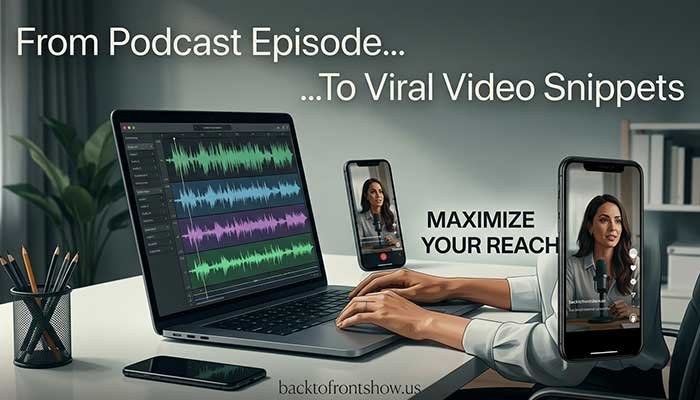
You can get more value from that work by turning useful moments into shorter content.
For example, a 25-minute interview might contain several memorable answers, practical tips, or interesting questions.
You could turn those moments into:
- A 30–60-second vertical video
- An Instagram Reel
- A YouTube Short
- A TikTok clip
- A short LinkedIn post for a professional audience
You don’t need to use every platform.
Choose one or two places where your ideal listeners already spend time.
What makes a good podcast clip?
A useful clip should make sense without requiring someone to listen to the entire episode first.
Imagine you’ve recorded an episode about improving productivity.
Instead of opening the clip with:
“Welcome back to episode seven…”
Start with something useful:
“Most people make one big mistake when planning their workday.”
Then share the relevant advice.
The opening gives viewers a reason to keep watching.
Add accurate captions when possible, especially for people watching without sound.
At the end, you can include a short call to action:
“Listen to the full episode for the complete breakdown.”
How many clips should you create?
For a beginner, I’d start with two or three genuinely useful clips per episode.
Test different topics, openings, and formats.
There’s no need to publish ten clips from every episode if they’re repetitive or add little value.
Also, remember that social media views aren’t the same as podcast listeners.
A clip may receive hundreds of views without generating many episode plays.
What matters is whether the content helps the right people discover your podcast.
6. Find Your Listeners in Relevant Online Communities
You don’t need a large social media following to reach people interested in your podcast topic.
Online communities already bring together people with shared interests.
Depending on your audience, useful places may include:
- Relevant Reddit communities
- Facebook groups
- Discord servers
- LinkedIn groups and professional communities
- Niche forums
- Local clubs and organizations
For example, if your podcast teaches beginner gardening, you could participate in gardening communities.
If your podcast focuses on freelance writing, look for communities where freelancers exchange advice.
The right way to promote in communities
Don’t join a group and immediately post:
“Check out my new podcast!”
That often looks like spam and may violate community rules.
Instead, start by answering questions and participating in discussions.
Suppose someone asks how to find their first freelance client.
You might explain two or three useful approaches directly in your reply.
If the community allows relevant self-promotion, you could then mention an episode that explores the question in greater detail.
The important part is providing value even if nobody clicks your link.
Before sharing any podcast episode, read the community’s promotional guidelines.
Some groups allow self-promotion in designated threads. Others prohibit it entirely.
Respect those boundaries.
Over time, useful participation can help people recognize your expertise and become interested in your content.
7. Collaborate With Small Podcasters and Creators
Collaborating with someone who already speaks to your target audience can help introduce your podcast to relevant people.
And you don’t need celebrity guests.
For a new podcast, working with smaller creators may be more practical than approaching major influencers.
Look for people whose content complements yours.
For example:
| Your podcast topic | Potential collaborator |
|---|---|
| Personal finance | Budgeting blogger or financial educator |
| Fitness for beginners | Personal trainer or wellness creator |
| Freelancing | Freelance designer, writer, or consultant |
| Parenting | Parenting blogger or family educator |
| Small business | Local business owner or entrepreneurship podcaster |
Ways to collaborate
You could invite someone for an interview, appear on their podcast, record a joint episode, or arrange a relevant cross-promotion.
A collaboration should make sense for both audiences.
If your podcast focuses on beginner freelancers, inviting an experienced freelance designer to explain how they found their first clients could create a genuinely useful episode.
That guest might choose to share the interview with their audience.
But don’t assume every guest will promote your show.
Make sharing easy by providing a short description, a suitable clip, and a direct episode link.
A simple collaboration message
Hi! I host a podcast about helping beginners build freelance careers. I enjoyed your content about finding design clients, and I think our audiences share similar interests. Would you be interested in discussing your advice on a future episode? I think it could be a useful conversation for people just getting started.
Keep the invitation personal and explain why the collaboration would benefit listeners.
Avoid sending the same generic message to dozens of creators.
One relevant collaboration may be more valuable than several unrelated promotions.
8. Give Listeners One Clear Reason to Share Your Podcast
Word of mouth can be useful for building an early podcast audience.
But simply saying “Please share my podcast” isn’t always compelling.
People are more likely to recommend content when they believe someone else will benefit from it.
So create episodes that are easy to recommend.
For example:
“How to Prepare for Your First Job Interview”
is something a listener might share with a friend who has an upcoming interview.
Likewise:
“Five Common Mistakes First-Time Homebuyers Should Avoid”
could be relevant to someone preparing to purchase a home.
Make sharing easy
At the end of an episode, you could say:
“If this episode helped you, consider sending it to a friend who’s dealing with the same challenge.”
That’s a natural call to action.
You can also include a direct episode link in your show notes and social media profiles.
Apple Podcasts provides
podcasters.apple.com, including customizable social assets, links, embedded players, and QR codes.
These materials can make sharing more convenient.
You don’t need elaborate graphics to start.
A clear episode title, a short description, and a working link are often enough.
9. Track Which Promotion Methods Actually Bring Listeners
When you’re promoting a new podcast, it’s easy to get distracted by visible numbers.
A social media post with 2,000 views might look more successful than a conversation that leads to five people listening.
But reach alone doesn’t tell you whether your podcast audience is growing.
You need to look at what happens after somebody discovers your content.
Start with a few basic metrics
I’d recommend reviewing four things:
1. Unique audience
How many distinct people are listening during your chosen reporting period?
2. Episode plays or downloads
Which episodes are attracting the most activity?
3. Listening engagement
Are people continuing beyond the opening minutes?
4. Returning audience
Are listeners coming back to hear additional episodes?
Spotify for Creators provides audience reporting that includes new and returning listeners. Its analytics also distinguish podcast plays, downloads, and audience estimates.
You can read more in
support.spotify.com.
Apple Podcasts Connect also offers engagement information. For example, Apple defines engaged listeners as people who listened to or watched at least 20 minutes or 40% of an episode.
These metrics can help identify which topics resonate with your audience, but remember that different platforms measure engagement differently.
Compare promotion methods
You can keep a simple tracking sheet.
For example, imagine the following hypothetical results from a new podcast:
| Promotion method | Activity | Observed result |
|---|---|---|
| Personal outreach | 25 relevant messages | 12 recipients say they listened |
| Reddit discussion | 3 helpful contributions | 18 tracked link clicks |
| Instagram Reels | 6 clips | 30 tracked link clicks |
| Guest collaboration | 1 interview | 15 tracked link clicks |
These numbers are examples, not industry averages.
Importantly, link clicks and self-reported listens shouldn’t be treated as equivalent to verified unique listeners.
Instead, use this information to understand where people are showing interest.
You can combine your promotion records with listening data to identify promising approaches.
Spotify also provides
support.spotify.com that can help creators understand clicks and listening activity associated with shared Spotify links.
For a small podcast, simple tracking is better than spending hours analyzing every available metric.
10. Publish Consistently and Improve Based on Feedback
Getting somebody to try your podcast is only the beginning.
Your next goal is to give them a reason to return.
Consistency helps people understand what to expect from your show.
That doesn’t mean you must publish daily.
If you can create one useful episode every week, that’s a reasonable starting point.
If publishing every two weeks allows you to maintain better quality, that can work too.
Choose a schedule you can realistically maintain.
Ask early listeners for specific feedback
Instead of asking:
“Did you like my podcast?”
Try asking:
- Which part of the episode was most useful?
- Was anything confusing or unnecessary?
- What question should I answer next?
Specific questions can produce more actionable feedback.
If several listeners say the opening is too long, consider shortening it.
If they consistently respond positively to practical examples, include more of them.
If a particular topic attracts new listeners and encourages them to return, explore related subjects.
A podcast should become more useful as you learn what your audience needs.
In my view, new podcasters benefit more from improving the listening experience than from constantly changing their marketing strategy.
Promotion helps someone discover your show. The content gives them a reason to stay.
A Simple 30-Day Plan to Get Your First 100 Podcast Listeners
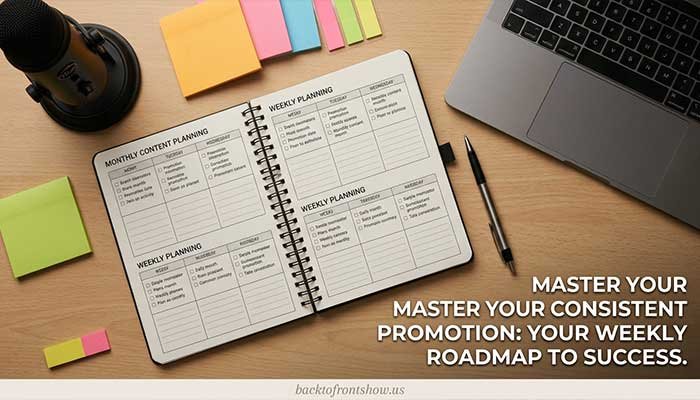
A focused 30-day plan can help you build momentum without turning podcast promotion into a full-time job.
The schedule below is a suggested workflow, not a guarantee that you’ll reach 100 listeners within a month.
| Timeframe | Main focus | Actions |
|---|---|---|
| Days 1–7 | Prepare and launch | Define your audience, publish your first three episodes, check distribution, and invite relevant contacts |
| Days 8–14 | Start promoting | Publish short clips, participate in niche communities, and improve episode descriptions |
| Days 15–21 | Expand reach | Contact potential collaborators, publish another useful episode, and encourage relevant sharing |
| Days 22–30 | Measure and improve | Review audience data, gather feedback, identify useful promotion channels, and plan upcoming episodes |
Week 1: Build a strong foundation
Your first priority is to make your show ready for people to discover.
Publish useful content, confirm that your episode links work, and write a clear podcast description.
Then personally introduce the show to people who may find it valuable.
You should also select a simple way to track your listener growth.
Week 2: Focus on discovery
Start creating short promotional clips and participating in relevant communities.
Experiment with different episode descriptions and social media openings.
Don’t judge a strategy based on just one post.
Give yourself enough opportunities to see which messages attract interest.
Week 3: Reach beyond your immediate network
Contact a few potential collaborators.
Look for creators who already serve a similar audience.
You could also ask your existing listeners which subjects they’d like you to cover.
Use that feedback when planning your next episode.
Week 4: Review your progress
Open your analytics dashboard and compare the results with your starting point.
Consider these questions:
- Which episodes attracted the most people?
- Did listeners return after their first episode?
- Which promotions generated meaningful interest?
- What feedback did you receive?
- What should you change next month?
Keep doing what appears useful, and adjust approaches that aren’t producing meaningful results.
If you reach 100 listeners, that’s an encouraging milestone.
If you reach 35 or 60 instead, you still have a starting audience and information you can use to improve.
The important thing is building a repeatable process.
How Many People Do You Need to Reach to Get 100 Listeners?
This depends on how many people who encounter your promotion actually become listeners.
There’s no universal conversion rate for new podcasts.
But a hypothetical example can help you plan.
Suppose 5% of the people who visit your podcast landing page become listeners.
Under that assumption:
| Landing page visitors | Assumed conversion rate | Estimated listeners |
|---|---|---|
| 200 | 5% | 10 |
| 500 | 5% | 25 |
| 1,000 | 5% | 50 |
| 2,000 | 5% | 100 |
This is a simplified illustration, not a measured podcast industry benchmark.
Real results may differ considerably depending on your topic, audience, offer, and traffic source.
Also, a landing-page conversion estimate isn’t the same as verified audience analytics.
The lesson is that you don’t necessarily need a massive audience.
You need to reach enough relevant people and persuade some of them to give your show a try.
That might happen through several small channels rather than one viral post.
Common Mistakes That Keep New Podcasts From Growing
Even when you’re making useful episodes, a few avoidable mistakes can make audience building harder.
Promoting your podcast to everyone
A broad message reaches people who may have little interest in your subject.
Focus on relevant communities and specific listener problems instead.
Spending too much money before validating the show
Professional equipment, paid advertisements, and expensive promotional tools aren’t prerequisites for finding your first listeners.
Start with a reasonable recording setup and test organic promotion before making major investments.
Paid promotion may become useful later, but it isn’t necessary for this initial milestone.
Asking for subscriptions before providing value
A new listener doesn’t know whether your podcast deserves a place in their routine.
Give them a useful episode first.
Then invite them to follow for more content.
Publishing episodes without promoting them
Uploading your show is not the same as having a distribution and promotion strategy.
Set aside time to share each episode where relevant listeners can discover it.
Buying podcast plays or followers
Artificial engagement doesn’t give you a genuine audience.
It can also distort your analytics and may violate platform rules.
Avoid services promising guaranteed listeners, downloads, or chart rankings.
Your goal should be real people choosing to listen.
Giving up after a few episodes
A slow start doesn’t automatically mean your podcast idea is bad.
You may need to improve your episode topics, introductions, descriptions, or promotion channels.
Use early results to learn before deciding whether a larger change is necessary.
What Should You Do After Reaching 100 Podcast Listeners?
Once you reach your first 100 listeners, shift some of your attention from getting discovered to encouraging repeat listening.
Look for patterns in the episodes people enjoy.
You might notice that beginner tutorials perform better than general discussions, or that guest conversations encourage more sharing.
Use those observations to guide your next episodes.
You can also begin building a more direct connection with your audience through an email newsletter, community, or website, if those channels fit your show.
The next goal doesn’t have to be 1,000 listeners immediately.
A more useful target might be getting a higher percentage of your existing audience to return.
For example, if people regularly listen to new episodes, recommend your show, and ask questions, you’re beginning to build a community around your content.
Those relationships can help support long-term podcast growth.
Frequently Asked Questions
Final Thoughts
Getting your first 100 podcast listeners isn’t about finding a secret promotion trick.
It’s about understanding who your podcast serves, publishing episodes those people want to hear, and making your show easier to discover.
Start with a focused audience. Create a few genuinely helpful episodes. Personally invite relevant listeners, promote useful moments, and collaborate with people who share similar interests.
Then pay attention to what happens.
Which topics attract interest? Which listeners return? What feedback can help you improve?
You don’t need to build a massive audience overnight.
Your first goal is to get real people listening. Your next goal is to give them a reason to come back.
That creates a stronger foundation for sustainable podcast growth.