You get more podcast listeners by making your show easier to find, showing up consistently on the platforms your audience actually uses, repurposing your episodes into shareable content, and borrowing reach from other people’s audiences through guesting and cross-promotion. There’s no single trick that fixes slow growth overnight — it’s a handful of habits that compound over weeks and months.
This guide walks through each of those pieces in order, starting with the foundation (making your podcast discoverable) and moving into promotion, repurposing, and the analytics that tell you what’s actually working. If you’re a few episodes in and wondering why downloads aren’t moving, start with the “common mistakes” section near the end — it’s usually one of two or three things.
Why Podcast Growth Feels Slow Right Now
It helps to understand the landscape you’re growing in. Podcast listening in the U.S. is genuinely at an all-time high — Edison Research’s Infinite Dial 2026 study found that 80% of Americans age 12 and older (roughly 230 million people) have listened to or watched a podcast at some point, and 81% listened to online audio in the past month. That’s a bigger audience than podcasting has ever had.
But the number of shows competing for that audience has also grown. Industry trackers put the total number of active podcasts worldwide at well over 4.5 million. Most of those shows get very few listens, not because podcasting doesn’t work, but because most creators publish a handful of episodes, do no promotion, and stop.
In my experience, that’s actually good news for anyone willing to put in consistent effort. The bar to stand out isn’t “be the best show in your category” — it’s “be findable, be consistent, and be worth someone’s time.” A lot of shows fail one of those three basics.
Read More: Podcast Statistics in the US (2026): Listeners, Growth & Ad Data
Step 1: Make Your Show Easy to Discover
Before you promote a single episode, make sure people who find your show can actually understand what it is and decide to hit play. This is podcast SEO in the most literal sense — it’s how your show shows up in search and how it converts a browser into a listener.
Write titles and descriptions like a search result, not a headline
Podcast apps and search engines both index your show and episode titles and descriptions as text. If your episode is about interviewing a marketing expert on paid social ads, a title like “Episode 47” tells search engines and potential listeners nothing. Something like “Paid Social Ads on a Small Budget, with [Guest Name]” does two jobs at once: it’s readable for a human scanning a list, and it contains the actual topic someone might search for.
The same logic applies to your show description and each episode’s show notes. Write them the way you’d explain the episode to a friend, and naturally include the terms someone might type into a search bar or podcast app — without stuffing keywords in unnaturally.
Choose specific categories, not just broad ones
Apple Podcasts and Spotify both let you assign categories to help your show surface in browse and search. A common mistake is picking the broadest category available (“Business”) instead of a more specific one that matches your actual content (“Investing” or “Entrepreneurship”). A narrower, accurate category puts you in front of listeners actively looking for that kind of show, rather than getting buried in a huge general category.
Invest in cover art that reads clearly at thumbnail size
Your cover art often gets seen as a tiny thumbnail before anyone reads a word of your description. Simple, legible text and a clear visual concept beat a busy, detailed design almost every time. If you can’t tell what your show is about from the thumbnail on a phone screen, it’s worth revisiting.
Step 2: Meet Listeners Where They Actually Are

Where you focus your promotion should follow the data on where people are actually listening — not assumptions from a few years ago.
According to Edison Research’s Infinite Dial 2025 report, YouTube has become the most-used platform among U.S. weekly podcast listeners, followed by Spotify and then Apple Podcasts. Video podcasting is a big part of that shift: Spotify reported that more than 500 million users have streamed a video podcast on its platform, up nearly 50% year-over-year as of its 2026 investor update.
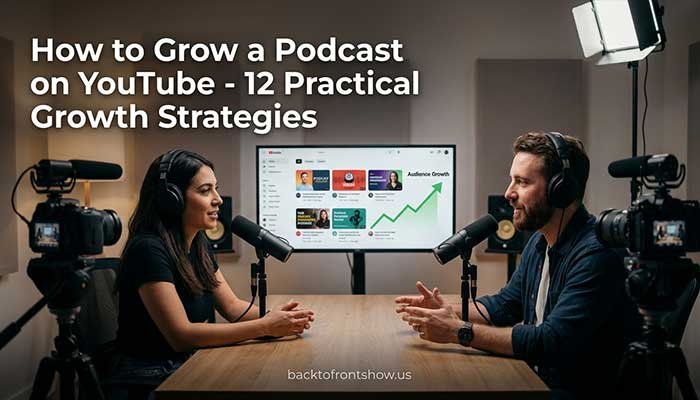
That doesn’t mean audio-only shows are obsolete — plenty of successful podcasts remain audio-first. But if you’re deciding where to put your effort, publishing video (even a simple two-camera setup) and distributing it to YouTube alongside your audio feed is no longer a “nice to have” for many genres. It’s becoming the default expectation, especially for interview and conversational formats.
| Platform | What it’s good for | Worth prioritizing if… |
|---|---|---|
| YouTube | Discovery through search and recommendations; video-first audiences | You can record video or want the largest current discovery surface |
| Spotify | Built-in audience, video support, monetization through the Spotify Partner Program | You want an easy on-ramp for both audio and video with growth tools |
| Apple Podcasts | Long-established audio audience, strong on iPhone/CarPlay | Your audience skews toward Apple devices and audio-only listening |
I usually recommend new podcasters submit to all three major platforms through their hosting provider’s RSS distribution rather than treating this as an either/or choice. The effort to be listed everywhere is low; the potential upside in discoverability is not.
Step 3: Turn Every Episode Into More Than One Piece of Content

Recording an episode is the expensive part. Publishing it once and moving on leaves a lot of potential reach on the table. Repurposing turns one recording into several chances to be discovered.
Practical ways to repurpose an episode:
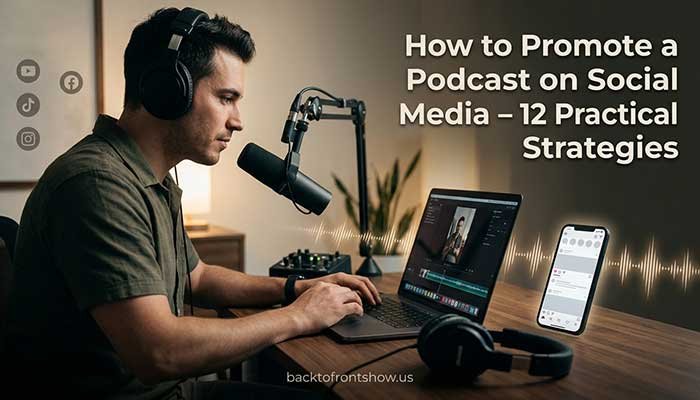
- Clip 2–4 short, self-contained moments from each episode (a strong opinion, a surprising stat, a punchy story) and post them as vertical video on TikTok, Instagram Reels, and YouTube Shorts.
- Pull a quote or key takeaway for a text post on LinkedIn or X, especially for business, career, or educational podcasts.
- Publish a short written recap or transcript excerpt on your website — this also helps with search engine discovery separate from podcast app search.
- Reuse guest quotes (with permission) as social proof when reaching out to future guests or sponsors.
A common mistake I’ve seen is treating the podcast episode as the only deliverable, then feeling like promotion is a separate, exhausting task tacked on afterward. It works better to plan the clips and social posts as part of the same recording session, not as an afterthought once the episode is already live.
Step 4: Grow Through Other People’s Audiences
New listeners rarely show up just because your show exists. Most early growth comes from borrowing attention that already exists elsewhere.
Guest on other podcasts in your niche
Being a guest on a show with an audience similar to the one you want puts you directly in front of people who already listen to podcasts in your topic area — a much warmer audience than a cold social media post. Look for shows of a similar or slightly larger size; hosts of very large shows are harder to book, and shows that are too small won’t move the needle much.
Do guest swaps and cross-promotion
Invite hosts of complementary (not competing) shows onto your podcast, and appear on theirs. This works especially well between shows with overlapping but not identical audiences — for example, a podcast about freelance writing and a podcast about small business marketing.
Ask happy listeners to share, not just rate and review
Ratings and reviews matter for social proof and platform algorithms, but a personal share from a listener to a friend often drives more new listeners than a five-star review most people will never see. A simple, specific ask at the end of an episode — “if this episode helped you, send it to one person who’d get value from it” — tends to work better than a generic “please subscribe.”
Step 5: Build a Reason for People to Come Back
Getting a first-time listener is only half the job. Podcast growth compounds when people become repeat listeners, because repeat listeners are the ones who eventually share your show with others.
- Publish on a consistent schedule. Irregular publishing makes it hard for even interested listeners to build a habit around your show.
- Give listeners a next step, like an email list, newsletter, or community, so you’re not solely dependent on them remembering to open their podcast app.
- Keep a recognizable format or segment listeners can look forward to, even within a varied topic lineup.
In my experience, the shows that grow steadily over time are rarely the flashiest — they’re the ones that show up reliably, week after week, until listening becomes part of someone’s routine.
Step 6: Let Your Analytics Guide What You Do Next
Growth tactics work differently for every show, which is why tracking your own data matters more than copying someone else’s playbook exactly. Most hosting platforms and Spotify for Creators provide analytics on:
- Downloads or streams per episode, to spot which topics or guests perform best
- Listen-through rate, to see where listeners drop off within an episode
- Traffic source, to understand which platform, social post, or referral is actually bringing new listeners
- Audience growth over time, rather than single-episode spikes
One thing I’ve noticed is that creators often chase a single viral episode instead of paying attention to which topics consistently perform above average. A steady pattern across several episodes is usually a more reliable growth signal than one outlier.
Common Mistakes That Slow Podcast Growth
- Inconsistent publishing — sporadic episodes make it hard to build a listening habit.
- Vague titles and descriptions that don’t tell a potential listener (or a search engine) what the episode is about.
- Publishing to only one platform when your audience may primarily be on another.
- No clear call to action at the end of episodes — listeners rarely take a next step you didn’t explicitly ask for.
- Ignoring analytics and guessing at what’s working instead of checking.
- Treating promotion as optional rather than part of the regular production process.
A Simple Starting Checklist
- Rewrite your show description and your last three episode titles with clear, specific language.
- Confirm your show is listed on YouTube, Spotify, and Apple Podcasts.
- Clip two short moments from your most recent episode for social media.
- Reach out to one host of a similar-sized, complementary show about a guest swap.
- Add one clear, specific call to action to your next episode’s outro.
- Check your analytics dashboard and note your best-performing episode from the last month — then plan a follow-up on that topic.
FAQ
Key Takeaways
Growing podcast listeners isn’t about finding one hidden trick — it’s about removing friction (so people can find and understand your show), showing up where your audience already spends time, repurposing your work instead of publishing once and moving on, and consistently giving people a reason to come back. None of these steps are complicated on their own. The results come from doing them consistently over months, not days.