If you’re just starting out, the best podcast hosting platforms for beginners are Buzzsprout, Spotify for Creators, Podbean, Captivate, and Transistor. Each one handles the technical side of podcasting (storing your audio, generating your RSS feed, and distributing episodes to Apple Podcasts, Spotify, and everywhere else) so you can focus on making the show itself.
Here’s the short version: if you want the simplest possible start with zero cost, go with Spotify for Creators. If you want a paid plan that’s genuinely beginner-friendly with strong analytics and a polished dashboard, Buzzsprout is the one I recommend most often. If budget matters and you want unlimited storage without paying much, look at Podbean.
I’ve spent the last two years helping people get their shows online and troubleshooting the hosting problems that come up along the way. The single biggest mistake I see beginners make isn’t choosing the “wrong” platform, it’s not understanding what podcast hosting actually does. So before we compare platforms, let’s clear that up.
What Podcast Hosting Actually Does (and Why You Need It)
A podcast host isn’t just a place to store your audio files. It’s the service that generates your RSS feed, which is the technical document that tells Apple Podcasts, Spotify, YouTube Music, and every other podcast app that a new episode exists. Without an RSS feed, your show can’t show up in any podcast app.
When you upload an episode to your host, it:
- Stores the audio (or video) file
- Updates your RSS feed automatically
- Pushes the update out to the directories you’re connected to (Apple Podcasts, Spotify, etc.)
- Tracks downloads and listener data
- Usually gives you a basic podcast website and embeddable player
In my experience, this is the part beginners underestimate. You could technically upload an MP3 to your own server and hand-build an RSS feed, but that’s a lot of ongoing technical work for very little benefit. A dedicated host handles all of it in a few clicks.
Read More: Podcast Listener Statistics: How Many Americans Are Actually Listening in 2026
What to Look For in a Beginner-Friendly Podcast Host
Before you compare specific platforms, it helps to know what actually matters at the beginner stage. Not every feature is worth paying for on day one.
- A genuinely free or low-cost starting tier. You don’t know yet if you’ll stick with podcasting, so don’t overcommit financially in month one.
- Unlimited storage, or storage that fits your publishing schedule. Some hosts charge by upload hours per month, others by total downloads. Understand which model you’re paying for.
- One-click distribution. The host should submit your show to Apple Podcasts, Spotify, and other major directories without you having to do it manually.
- Basic analytics. You’ll want to know how many downloads you’re getting and where listeners are coming from, even if you’re not chasing sponsorships yet.
- A built-in podcast website. This gives you a shareable link before you’ve built anything else.
- No long-term contract. Month-to-month billing lets you switch hosts later without losing money.
One thing I’ve noticed with new podcasters is that they spend more time comparing hosting platforms than actually recording their first episode. Pick one that meets the basics above and get started. Almost every major host lets you export your RSS feed and switch later if you outgrow it.
Best Podcast Hosting Platforms for Beginners: Quick Comparison
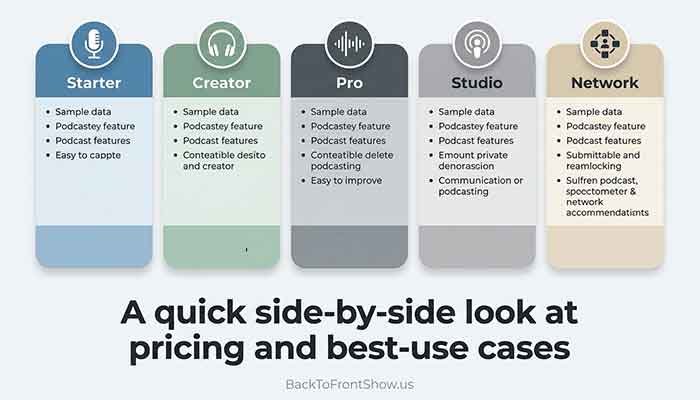
| Platform | Starting Price | Free Plan | Storage Model | Best For |
|---|---|---|---|---|
| Spotify for Creators | Free | Yes, unlimited | Unlimited | Zero-budget beginners |
| Buzzsprout | From $15/mo (billed annually) | Yes, limited (2 hrs/mo, 90-day retention) | Upload-hour based | Easiest overall experience |
| Podbean | From $12/mo (billed annually) | Yes, limited | Upload-limit based, unlimited total storage | Budget-conscious beginners |
| Captivate | From $17/mo (billed annually) | No | Download-based, unlimited storage | Growth-focused creators |
| Transistor | From $19/mo | No (14-day trial) | Download-based, unlimited storage | Multiple shows on one account |
Pricing above reflects current published rates as of publication. Podcast hosting prices and plan structures change fairly often, so double-check the platform’s own pricing page before you subscribe.
The Best Podcast Hosting Platforms for Beginners, Reviewed
1. Spotify for Creators (Best Free Option)
Spotify for Creators, formerly known as Anchor and then Spotify for Podcasters, is completely free podcast hosting with unlimited storage. There’s no monthly fee, and it includes RSS distribution, basic analytics, and monetization through the Spotify Partner Program in eligible markets.
Pros:
- Completely free, including unlimited storage
- No technical setup required
- Built-in monetization through Spotify’s ad program
- Native video podcast support
Cons:
- Analytics are less detailed than paid, IAB-certified hosts
- Monetization requires meeting Spotify’s Partner Program thresholds, and Spotify takes a share of ad revenue
- You’re more tied to Spotify’s ecosystem than with independent hosts
Who it’s best for: Someone testing whether podcasting is right for them, or a beginner who wants to launch a show with zero financial risk.
Who might want to avoid it: Podcasters who want detailed, sponsor-ready analytics from day one, or who plan to monetize primarily outside of Spotify’s ad system.
In my experience, Spotify for Creators is the easiest possible way to publish your first episode, and there’s real value in that. I usually recommend it to people who aren’t sure yet whether they’ll stick with a weekly show. You can always move to a paid host later once you know your show is going to continue.
2. Buzzsprout (Best Overall for Beginners)
Buzzsprout is one of the most recommended podcast hosts for beginners, and for good reason. The onboarding process walks you through publishing your first episode step by step, and the dashboard doesn’t overwhelm you with options you don’t need yet.
Buzzsprout’s current pricing structure includes an Audio plan starting at $15/month when billed annually, an Audio + Video plan starting at $25/month annually for creators who want to publish video to Apple Podcasts, Spotify, and YouTube, and Multi-Podcast plans for running up to 5 or 10 shows from one account. There’s also a free plan that includes 2 upload hours per month, though episodes are removed after 90 days unless you upgrade.
Pros:
- Extremely beginner-friendly onboarding
- IAB-certified analytics you can eventually share with sponsors
- Automatic transcripts included on paid plans
- Built-in podcast website and monetization tools (Listener Support, Premium Content, Buzzsprout Ads)
Cons:
- Free plan isn’t permanent; episodes are deleted after 90 days
- Pricing is tied to upload hours, which can get restrictive if you publish frequently or run long episodes
- No native video hosting on the standard Audio plan
Who it’s best for: First-time podcasters who want the simplest, most guided setup experience and don’t mind paying a modest monthly fee.
Who might want to avoid it: Podcasters who publish long or frequent episodes and would rather pay based on downloads than upload hours.
A common mistake I’ve seen with new podcasters on Buzzsprout is underestimating their upload hours. If you’re recording 90-minute interviews and publishing weekly, do the math on your monthly hours before you pick a plan, or you’ll end up upgrading sooner than expected.
3. Podbean (Best Budget-Friendly Option)
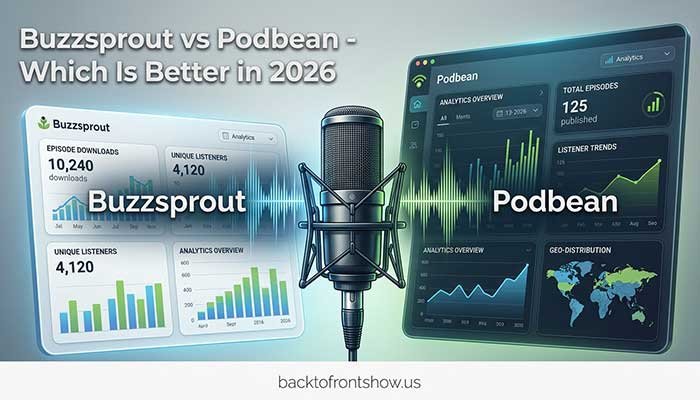
Podbean is one of the more affordable paid hosts, especially on annual billing. The Unlimited Audio plan runs $12/month when billed annually (or $17/month billed monthly) and includes 1GB of monthly uploads (roughly 16 hours of audio), unlimited total storage, and unmetered bandwidth. Podbean also has a free tier with limited monthly storage, which is useful for testing the platform.
Pros:
- One of the lower-cost paid options with unlimited total storage
- Built-in AI tools for audio cleanup and content generation (limited by monthly credits)
- Solid monetization options, including an ads marketplace
- Free plan available for testing
Cons:
- Monthly upload limits (measured in GB, not hours) can be confusing to estimate at first
- Advanced analytics and network-level features are reserved for higher tiers
- The free plan’s storage is quite limited
Who it’s best for: Beginners who want unlimited long-term storage without paying a premium price.
Who might want to avoid it: Podcasters who want the most generous free tier or the deepest analytics without upgrading.
4. Captivate (Best for Growth-Minded Beginners)
Captivate takes a different pricing approach: instead of charging by upload hours, it charges based on your monthly downloads, and every plan includes the full feature set with no features locked behind higher tiers. Pricing starts around $17–19/month depending on billing cycle, with unlimited storage and unlimited podcasts on every plan.
Pros:
- Every feature is available on every plan, including monetization and dynamic ad insertion
- Unlimited storage and unlimited shows, even on the entry-level plan
- Built specifically with growth and marketing tools (calls to action, guest booking, dynamic show notes)
Cons:
- No free plan
- Pricing is based on downloads, so a show that grows quickly can bump into a higher tier faster than expected
- Slightly steeper learning curve than Buzzsprout for absolute beginners
Who it’s best for: Someone who’s fairly confident they’re going to stick with podcasting and wants growth tools available from the start.
Who might want to avoid it: Someone who just wants to test the waters with no financial commitment.
5. Transistor (Best for Multiple Shows)
Transistor’s biggest differentiator is that every plan, including the entry-level $19/month Starter plan, allows unlimited podcasts under one account. That makes it a strong option if you think you might launch more than one show, or if you’re hosting shows for other people.
Pros:
- Unlimited podcasts and unlimited team members on every plan, including Starter
- Clean, modern dashboard and built-in podcast website
- Private podcasting supported on all tiers
Cons:
- No free plan (14-day free trial only)
- Pricing is based on monthly downloads, which scales up as your show grows
- Slightly higher starting price than Buzzsprout or Podbean
Who it’s best for: Beginners who already know they want to run more than one podcast, or agencies and creators managing shows for clients.
Who might want to avoid it: A solo beginner with one small show who wants the lowest possible starting cost.
Free vs. Paid Podcast Hosting: What’s the Real Difference?
Here’s an example to make this concrete. Imagine a weekly true-crime podcast with 30-minute episodes and around 500 downloads per episode in its first few months. On Spotify for Creators, that show could be hosted and distributed for free, with basic analytics and eventual ad monetization once it hits Spotify’s Partner Program thresholds. On a paid host like Buzzsprout, that same show would fit comfortably in the entry-level plan and get more detailed, IAB-certified analytics plus a nicer built-in website.
In my experience, the free vs. paid decision usually comes down to two things: how important detailed analytics are to you right now, and whether you want built-in monetization tools beyond what a free platform offers. If you’re not chasing sponsors yet, free hosting is a perfectly legitimate way to start. I’d recommend upgrading to a paid host once you’re either publishing consistently or actively trying to attract sponsorships, since sponsors typically want to see certified download data.
How to Choose the Right Host for Your Show
Here’s a simple decision process I usually walk beginners through:
- Decide your budget first. If $0 is the goal, Spotify for Creators is your starting point. If you’re comfortable paying $12–20/month, you have several strong options.
- Estimate your monthly upload volume. Weekly 30–45 minute episodes are a very different math problem than daily hour-long shows. This affects whether an hour-based host (like Buzzsprout) or a download-based host (like Captivate or Transistor) makes more sense.
- Decide if you’ll run more than one show. If so, Transistor’s unlimited-podcasts-per-account model is worth a closer look.
- Think about monetization plans. If sponsorships are part of your long-term plan, prioritize hosts with IAB-certified analytics.
- Check for video support if you plan to publish on YouTube. Buzzsprout, Podbean, and Spotify for Creators all support video in some form; confirm the specifics before you commit.
Mistakes Beginners Make When Choosing a Podcast Host
- Choosing based on price alone, then switching within a few months. Migrating hosts is possible, but it’s an unnecessary hassle if you do a bit more research upfront.
- Not checking upload-hour limits before publishing long episodes. This is the most common surprise I’ve seen with new podcasters on hour-based plans.
- Assuming a free plan is permanent. Some free tiers, like Buzzsprout’s, delete episodes after a set period unless you upgrade.
- Ignoring analytics until they need them. If sponsorships are even a possibility down the line, it’s worth having certified analytics running from your first episode, not your fiftieth.
How to Get Started: Your First Steps
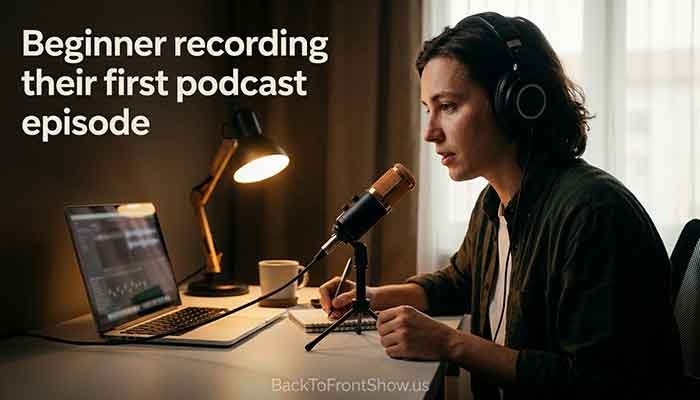
- Choose a host based on your budget and expected publishing schedule (use the comparison above).
- Sign up and create your show profile, including your podcast name, description, and cover art.
- Upload your first episode and fill out the episode title, description, and any show notes.
- Submit your RSS feed to Apple Podcasts, Spotify, and other directories, most hosts do this for you with one click.
- Set a realistic publishing schedule you can actually maintain, weekly or biweekly is usually more sustainable than daily for a new podcaster.
Key Takeaways
- The best podcast hosting platforms for beginners in 2026 are Spotify for Creators, Buzzsprout, Podbean, Captivate, and Transistor, each suited to a slightly different situation.
- Spotify for Creators is the strongest option if your priority is $0 cost.
- Buzzsprout offers the most beginner-friendly overall experience among paid hosts.
- Podbean is a strong budget pick with unlimited total storage.
- Captivate and Transistor are worth considering once you’re confident about growth or running multiple shows.
- Pricing and features change often in this space, so always confirm current details on the platform’s own pricing page before subscribing.